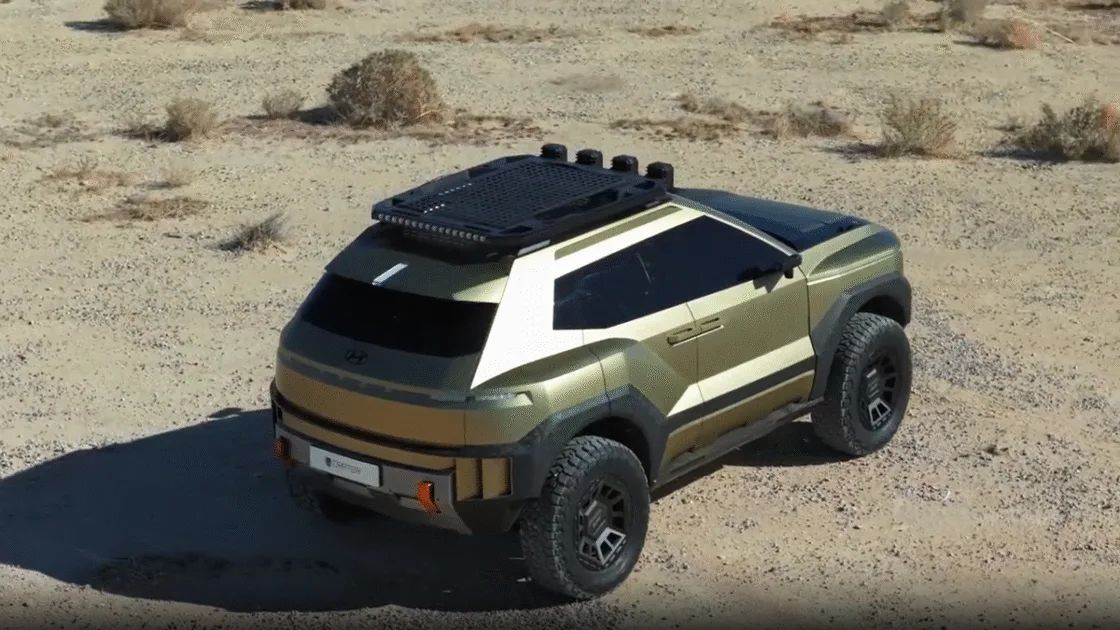
The Hyundai Crater Concept revealed, was developed in California and appears to be designed to navigate across difficult terrain.
Hyundai Crater Concept Revealed: At Automobility LA 2025, Hyundai did not attempt to impress with numbers or promises. Rather, it was the site of the world debut of the Crater Concept, a small off-roader designed, according to the brand, to explore ideas rather than sales charts. It demonstrates Hyundai’s current fixation with lifestyle mobility solutions and was developed in California.
Key Details of Hyundai Crater Concept Revealed
| Feature | Details |
| Event Debut | Automobility LA 2025 |
| Concept Type | Small lifestyle-focused off-road SUV |
| Design Origin | Developed in California |
| Interior Tech | Full-width HUD, BYOD infotainment, minimal screens |
| Exterior Highlights | Large skid plate, 33-inch off-road tyres, hex-pattern wheels |
| Special Features | Detachable mirrors (lights/cameras), steel hood cables, roof rack |
| Paint Option | Matte Dune Gold (desert-inspired) |
| Safety/Utility | Roll cage, off-road controls, first aid kit, extinguisher |
| Unique Touches | Bottle-opener recovery hook, detachable speaker |
| Production Status | No confirmation yet |
Also Read:- 5 New Compact SUVs Coming to India by 2026–27 — Big Launches Ahead!
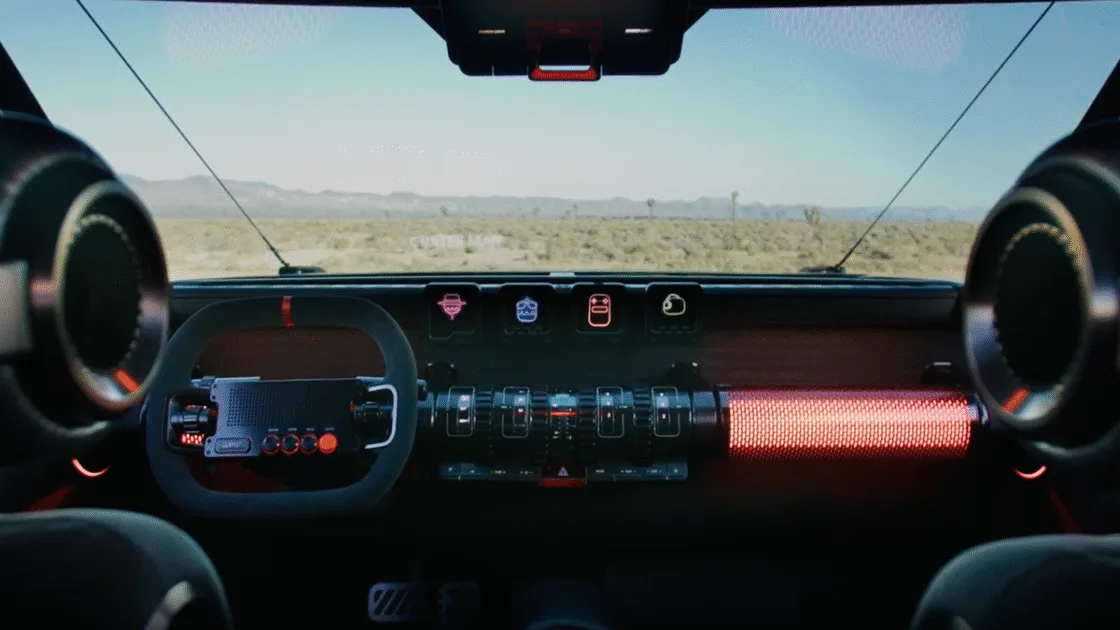
Hyundai does away with the typical premium SUV interior design. The cabin feels more like a controlled environment for off-grid travel. Traditional screens are replaced with a full-width head-up display, and the infotainment system uses a bring-your-own-device approach that lets users plug in their own devices rather than depending on built-in systems. The dashboard is softly lit through perforations and has a bent steel appearance with soft materials laid over it.
The enormous protective skid plate on the vehicle’s lower half keeps the design cohesive both mechanically and aesthetically. Wide fenders stretch over large 33-inch off-road tyres that are placed on wheels with hexagonal and geometric shapes above it. On the ground, the pattern appears to be something designed to fight its way out of loose sand, rock, and mud, but according to Hyundai, it represents a cosmic impact.
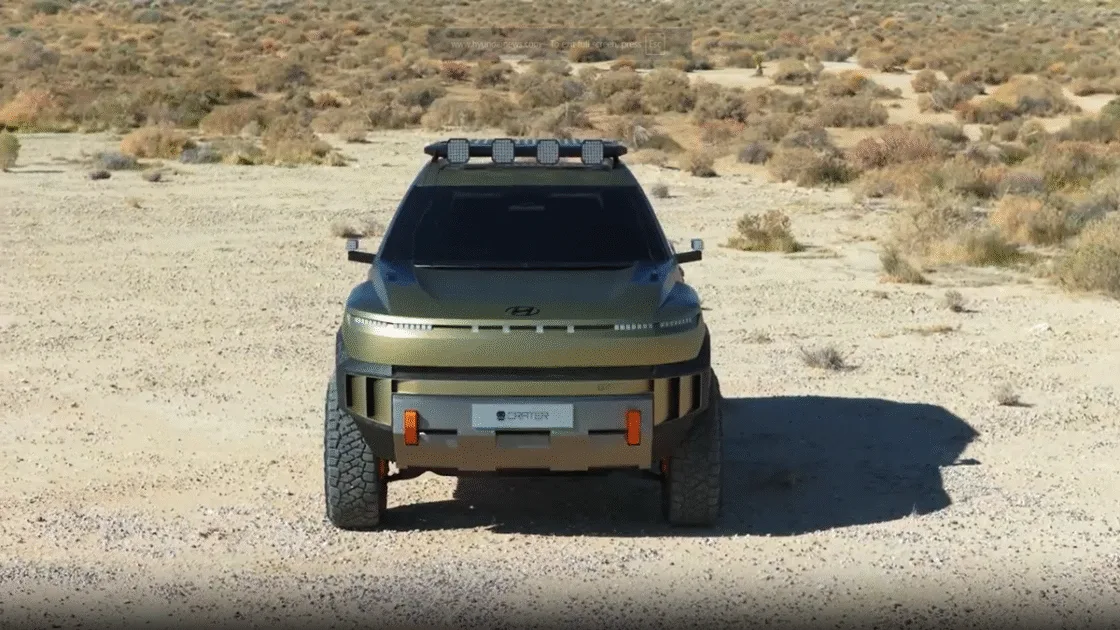
For actual equipment and illumination, there is a roof rack. When the trail gets closer, steel cables rise from the hood to the roof to protect the branches. A little party trick that doubles as a bottle opener is even concealed by the recovery hook. The side mirrors are an ingenious solution for camping or difficult recovery scenarios because they can be detached to become portable lighting or cameras.
The matte Dune Gold paint, which alternates between muted green and warm gold in the presence of light, visually conveys the tone of California’s deserts and coasts. In contrast, the Black Ember concept emphasises metal, Alcantara, and black leather that is meant to be worn in rather than out. Although Hyundai has never stated if it would go into production, the goal has always been to create a lifestyle off-road SUV.
Also Read:- Nissan Tekton vs New Renault Duster: Key Design Differences Explained
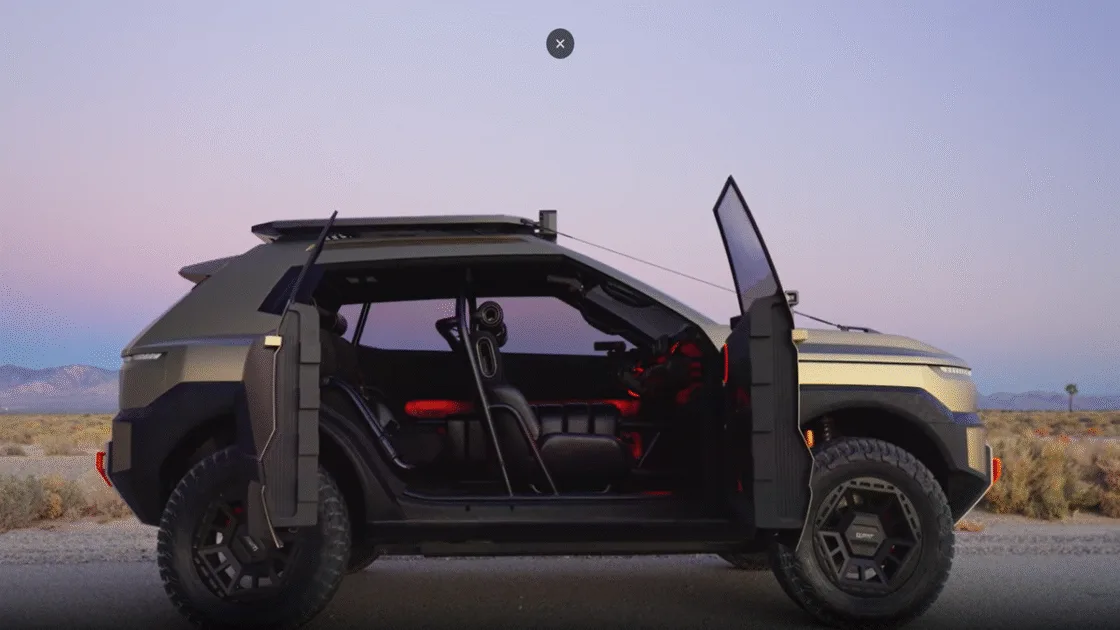
The seats include four-point harnesses, are extensively bolstered, and are covered in durable materials. For stability over uneven ground, grab grips are built into a visible roll cage that passes through the frame. Practical equipment is also pre-installed, including actual off-road controls, a first aid bag, a fire extinguisher, and even a detachable Bluetooth speaker.